
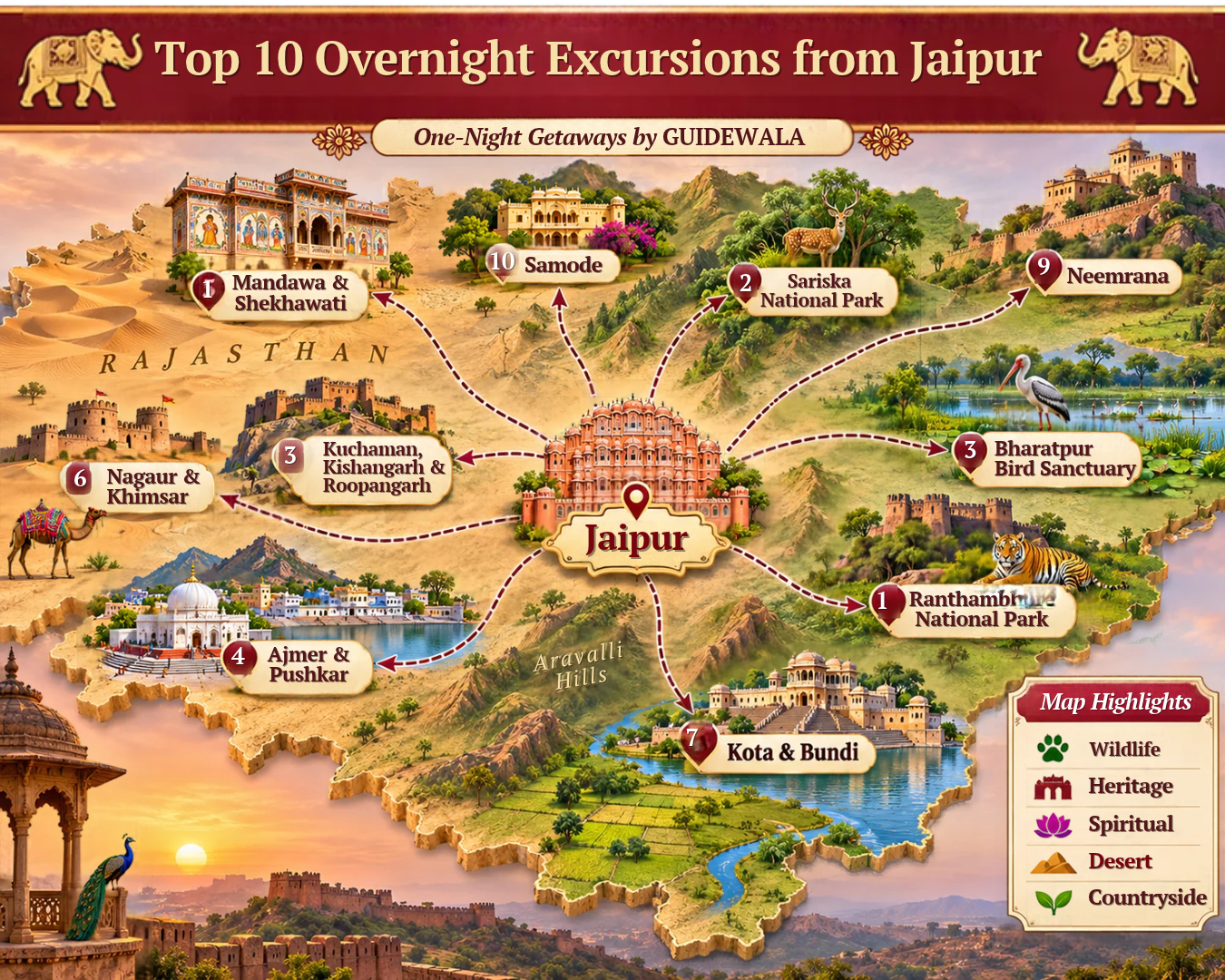
Top 10 Overnight Trips from Jaipur
By Team Guidewala · 16 November 2026
One night away from Jaipur can change the rhythm of a Rajasthan holiday. You could spend the evening beside Pushkar’s ghats, wake early for birdwatching in Bharatpur, explore painted merchant houses in Shekhawati or enjoy a quiet stay in a historic palace.
The best choice depends on how you want to spend your time. A wildlife break needs confirmed safari arrangements; a heritage walk needs time on foot; a relaxing hotel stay works best when the journey does not consume most of the weekend.
This guide brings together ten overnight-trip ideas, each with a suggested two-day outline and a practical planning note. Most work best with one main destination. The longer circuits deserve an extra night if you want a comfortable pace.
Choose Your Getaway at a Glance
- Shortest heritage retreat: Samode.
- A stay centred on the hotel: Neemrana.
- Wildlife and forest landscapes: Ranthambore or Sariska.
- Birdwatching and a slower pace: Bharatpur.
- Pilgrimage, markets and lakeside atmosphere: Ajmer and Pushkar.
- Painted havelis and merchant history: Mandawa and Nawalgarh.
- Palaces, murals and stepwells: Bundi, with Kota as an optional extension.
- Smaller heritage towns: Kuchaman or the Kishangarh–Roopangarh area.
- A longer countryside and fort escape: Nagaur and Khimsar, preferably with two nights.
Before choosing: check the drive from your actual Jaipur pickup point to the booked hotel or safari gate. Routes, traffic and stops affect journey times, and a destination’s distance from Jaipur does not include sightseeing detours. Avoid planning a long return drive immediately before a flight.
1. Ranthambore: A Forest Break with Time for Wildlife
Best for: Wildlife enthusiasts, photographers and travellers happy with early starts.
Overnight base: Sawai Madhopur or accommodation selected to suit your confirmed safari arrangements.
Ranthambore’s appeal includes its forest landscape, lakes and ruins as well as its wildlife. Approach a safari as an opportunity to observe the habitat, birds and animal behaviour. A tiger sighting is a possibility, never a promise.
A Practical Two-Day Plan
Day 1: Leave Jaipur early and allow time for lunch, check-in arrangements and travel to the safari reporting point. Take an afternoon safari only if its permit and reporting time are confirmed and the road journey leaves an adequate buffer. Otherwise, enjoy a relaxed afternoon and keep the safari for the next morning.
Day 2: Join a pre-booked morning safari, then have breakfast and return to Jaipur. If your schedule allows, discuss a separate visit to Ranthambore Fort; do not assume it fits comfortably after every safari.
Booking tip: Confirm the date, shift, zone, vehicle arrangement, reporting point and required identification. Your Jaipur transfer vehicle is not the same service as your authorised safari vehicle. Use the Rajasthan Forest Department’s booking links to check official arrangements.
Stay longer if: You want several safari opportunities and time for the fort without rushing. Operations, access and seasonal restrictions must be checked for your dates.
2. Sariska: Wildlife and the Aravalli Landscape
Best for: A nature-focused break with a carefully chosen countryside base.
Sariska combines wooded hills and wildlife tourism in the Alwar region. Its official destination information is a useful introduction, but the exact safari gate and accommodation location should guide your route.
A Practical Two-Day Plan
Day 1: Travel from Jaipur to your selected hotel. If the confirmed reporting time allows, take an afternoon safari; otherwise settle in and enjoy the surroundings.
Day 2: Take a booked morning safari or choose one nearby excursion, then return to Jaipur. Siliserh Lake can be considered if it suits your hotel location and route.
Planning tip: Sariska, Alwar and Bhangarh are not interchangeable stops at one location. Adding all of them can turn a short escape into a driving circuit. Bhangarh should be treated as a separate planned visit during permitted daylight hours, not an automatic safari add-on.
Check before paying: Current operating days, seasonal access, available safari shifts and the distance between your hotel and the reporting gate. Wildlife sightings are not guaranteed.
3. Bharatpur: An Unhurried Birdwatching Escape
Best for: Birdwatchers, nature photographers and travellers who enjoy patient observation.
Overnight base: Bharatpur, with convenient access to Keoladeo National Park.
Keoladeo is a UNESCO World Heritage Site, known for its wetland habitat and birdlife. The pleasure of a visit lies in slowing down: watching movement across the water, listening for calls and allowing a knowledgeable bird guide to explain what you are seeing.
A Practical Two-Day Plan
Day 1: Drive to Bharatpur, have lunch and spend the afternoon in the park using an available, permitted mode of exploration suited to your group.
Day 2: Return for an early birdwatching session, then have breakfast and begin the journey back. Add Lohagarh only if time, opening arrangements and your energy allow.
Planning tip: Winter is a popular period for migratory birdwatching, but bird activity depends on conditions, habitat and the season. No particular species should be promised. Bring binoculars if you have them and discuss walking distances or suitable transport before booking.
A guide can make the visit worthwhile for beginners as well as experienced birdwatchers. Avoid filling the same short trip with distant heritage detours if nature is your main interest.
4. Ajmer and Pushkar: Two Distinct Sacred Settings
Best for: Travellers interested in pilgrimage, living traditions and local markets.
Overnight base: Pushkar or Ajmer, depending on your priorities.
Ajmer’s Sufi heritage and Pushkar’s lake, temples and ghats offer different experiences within one journey. Give each place time rather than treating religious sites as quick photographic stops.
A Practical Two-Day Plan
Day 1: Depart Jaipur in the morning. In Ajmer, visit the Dargah of Khwaja Moinuddin Chishti and, if time permits, choose Ana Sagar or another nearby attraction. Continue to Pushkar, check in and take a gentle walk around the town and permitted lakeside areas.
Day 2: Visit the Brahma Temple, subject to entry arrangements, and explore the markets. Consider the Savitri Temple outing only if the climb or available ropeway arrangements suit your group, then return to Jaipur.
Explore Rajasthan Tourism’s Pushkar guide for an introduction to the town’s main sights.
Respectful visiting: Ask about dress, footwear, photography and entry procedures. Ritual participation is a personal choice; clarify any requested payment before agreeing to a service. Fair and festival dates vary, and busy periods need additional time and early accommodation planning.
5. Mandawa and Nawalgarh: Painted Havelis of Shekhawati
Best for: Architecture enthusiasts, photographers and travellers interested in trade and social history.
Overnight base: Mandawa or Nawalgarh.
Shekhawati’s painted mansions reveal a different side of Rajasthan from its royal palaces. These merchant houses can tell stories of family ambition, religious patronage, trade and changing tastes. A guided walk helps turn decorative details into a readable history.
A Practical Two-Day Plan
Day 1: Travel to your chosen base, check in and explore selected havelis and streets on foot. Keep the afternoon focused on one town rather than trying to visit the entire region.
Day 2: Visit a second town if the route allows, then return to Jaipur. For a slower trip, remain in the same town and spend more time at a smaller number of properties.
Access tip: Some havelis are private homes or have restricted interiors. Confirm access and any fees, ask before photographing residents, and never touch painted surfaces. Heritage accommodation should be checked for stairs and room access if mobility is a concern.
Rajasthan Tourism’s Shekhawati guide provides background on the region and its towns.
6. Nagaur and Khimsar: A Longer Fort and Countryside Journey
Best for: Heritage travellers who value a destination stay and can allow substantial driving time.
Recommended duration: Two nights for the combined circuit; one night only with a deliberately light programme.
Nagaur and Khimsar bring together fort architecture and the landscapes of western Rajasthan. Allow a substantial part of each day for the outward and return journeys. Choose this route when the fort stay and countryside are your main priorities and you are comfortable spending more time on the road.
A Practical Plan
For one night: Select Nagaur or Khimsar as the main destination. Depart early, visit one confirmed attraction or enjoy the booked property, and keep the following morning relaxed before returning.
With two nights: Discuss combining Nagaur’s fort with a Khimsar stay and a locally arranged countryside outing. Confirm each attraction and experience in advance rather than assuming hotel facilities or excursions are open to all visitors.
Planning tip: A countryside or sandy-landscape outing is not a guarantee of extensive dunes or a wildlife sighting. Ask the provider what the experience actually includes. Rajasthan Tourism’s Nagaur guide introduces the area’s heritage.
7. Bundi, with Kota as an Optional Extension
Best for: Travellers interested in palace art, stepwells and old-town streets.
Overnight base: Bundi for a focused one-night trip.
Bundi rewards close attention: carved details, painted interiors and the relationship between the town and its hillside buildings. Raniji Ki Baori is a highlight for visitors interested in the architecture of water. See Rajasthan Tourism’s Bundi guide.
A Practical Two-Day Plan
Day 1: Leave Jaipur early, arrive in Bundi and explore a manageable selection of the palace, stepwell and old-town streets, subject to opening arrangements.
Day 2: Continue sightseeing at a comfortable pace before returning to Jaipur. Add a fort climb only if conditions, access and your walking ability allow.
When to include Kota: Add a second night if you want to explore Kota’s museum and lakeside attractions properly. A brief detour may be possible, but it should not be combined with a long list of Bundi sights and an ambitious return schedule.
Walking tip: Heritage routes may involve steep or uneven surfaces. Discuss the actual route before booking for children, senior travellers or anyone with limited mobility.
8. Kuchaman or Kishangarh–Roopangarh: Choose a Focused Heritage Route
Best for: Repeat visitors who enjoy smaller towns and have confirmed access arrangements.
This option works best as a choice between routes, rather than a promise to cover three towns in one night. Kuchaman can be the focus of one trip; Kishangarh and nearby Roopangarh can form another, subject to the location of your accommodation and agreed visits.
A Practical Two-Day Plan
Day 1: Travel to your selected area. Visit the historic town and any pre-arranged property, allowing time for lunch and check-in.
Day 2: Enjoy one additional visit or a relaxed morning, then return to Jaipur. Do not add Kuchaman to a Kishangarh–Roopangarh itinerary without checking the extra driving and access first.
Planning tip: Forts and palace properties may be privately managed. Confirm sightseeing permission separately from room availability. Kishangarh’s artistic heritage can be a theme for the visit, but a workshop or collection visit should be specifically arranged rather than assumed.
The official heritage-property listings can help with initial research; they do not replace confirmation from the property.
9. Neemrana: Make the Heritage Stay the Main Event
Best for: Couples, families and travellers who want to slow down at a distinctive hotel.
Neemrana is especially suited to a break centred on the fort-palace itself. The terraces, courtyards and changing views give guests a reason to spend time within the property rather than moving between attractions.
A Practical Two-Day Plan
Day 1: Drive from Jaipur with time for traffic on the Delhi corridor. Plan arrival around the hotel’s check-in arrangements, then enjoy the property and the facilities included in your reservation.
Day 2: Have a leisurely breakfast and return to Jaipur after checkout. Keep additional sightseeing optional.
Booking tip: Historic hillside layouts can include substantial steps and uneven routes. Ask about the exact room location and access needs. Day visits, meals, activities and overnight stays may have different terms; none should be assumed included.
Read the property’s official history to understand its restoration and reuse before your visit.
10. Samode: A Short Journey with Room to Relax
Best for: A heritage break with less time on the road.
Samode is a particularly useful choice when the purpose of the trip is to rest, enjoy architecture and experience a different setting near Jaipur. Samode Palace and Samode Bagh offer distinct environments, so select the property that suits your plans rather than treating them as interchangeable.
A Practical Two-Day Plan
Day 1: Leave Jaipur without an unnecessarily early start, timing arrival around your reservation. Spend the afternoon enjoying the property or take a locally arranged village walk if that interests your group.
Day 2: Relax over breakfast, enjoy any included facilities and return to Jaipur after checkout.
Booking tip: Access to decorated interiors, dining areas and other properties must be confirmed. Ask permission before photographing people during village visits and respect that homes and workshops are working spaces.
Explore Samode Palace’s official information for its architecture and setting. This is a good option when you want the overnight stay to feel different from a day excursion.
Build a Two-Day Break Around One Main Experience
Start by choosing the moment you most want from the trip: an early safari, a guided haveli walk, time beside the ghats or an unhurried evening at a heritage hotel. Arrange the journey around that priority.
Day 1: Travel to your base, allow time for lunch and check-in, then enjoy one main activity. Keep the evening free for dinner and rest rather than filling it with another transfer.
Day 2: Choose an early outing or a relaxed breakfast, depending on your interests. Leave time for checkout, a meal stop and the return journey. Add a second attraction only when it fits comfortably.
For a safari break, the confirmed reporting time determines the schedule. For a hotel-focused stay, check-in and checkout times matter more. For a walking trip, consider daylight, heat and how long your group enjoys being on foot.
When Should You Travel?
For outdoor heritage visits, the cooler months—broadly October to March—are generally more comfortable than the hottest part of the year. Winter mornings can still be cold, particularly on open safari vehicles or while birdwatching.
Summer requires careful planning around heat, shade, hydration and activity times. Monsoon weather can change access and road conditions; do not assume a wildlife route operates simply because a nearby hotel is open.
For safaris, confirm current dates, shifts and restrictions before committing to the wider itinerary. For birdwatching, ask about recent habitat conditions. For Pushkar and other pilgrimage destinations, check festival dates and likely crowds for the particular year.
How to Plan Your Budget
Build the budget around four parts: return transport, accommodation and meals, guiding, and tickets or activities. Ask which charges apply to the whole group, which apply per room and which are payable per person.
For two couples sharing one vehicle, for example, compare the total for four travellers and two rooms before calculating a per-person amount. If you need separate rooms or additional beds, include those in the original enquiry so quotations cover the same arrangements.
Choose where you want to spend more. A wildlife trip may prioritise confirmed safari arrangements and a convenient hotel location. A heritage retreat may place more of the budget into the property and room experience. An art-focused visit may benefit most from a knowledgeable local guide.
Request a dated quotation for your exact group and itinerary. A generic starting price is useful only when its inclusions, occupancy and travel conditions are clear.
What Should Your Overnight Quote Include?
A useful quotation should make the entire two-day arrangement easy to understand:
- Pickup and return location, proposed route and expected return window.
- Vehicle category, luggage capacity, included use and additional charges.
- Driver expenses, parking and tolls where applicable.
- Hotel name, room category, occupancy and meal plan.
- Guide services, language and included duration.
- Entrance tickets, safari permits and separately charged experiences.
- Applicable taxes, payment schedule and cancellation terms.
For wildlife trips, clarify whether safari permits are confirmed or still being requested. For a heritage stay, confirm whether a private event or restoration work affects the experience. A list of attractions is a proposed plan, not a substitute for access confirmation.
What to Pack for One Night
Keep luggage compact and suited to your chosen activities:
- Identification and booking confirmations, including the documents specified for any safari.
- Comfortable footwear, a change of clothes and a light layer for cooler mornings.
- Sun protection, drinking water where permitted and your usual personal essentials.
- Phone charger, power bank and enough storage for photographs.
- Binoculars for birdwatching, if available, and a protective bag for camera equipment.
- Clothing suited to the entry requirements of religious sites you plan to visit.
Confirm luggage capacity when choosing your vehicle. Keep the items needed for an early outing accessible so you do not have to unpack everything before departure.
Frequently Asked Questions
Which option is best when I want very little driving?
Samode is the clearest choice from this list for a nearby heritage stay. Check the route from your actual Jaipur address and choose a property suited to your interests.
Can I fit two wildlife safaris into one night?
An afternoon safari followed by a morning safari can be possible when both bookings are confirmed and the arrival journey leaves enough time. One confirmed safari with a sensible buffer is better than two sessions dependent on an unrealistic drive.
Are these trips suitable for senior travellers?
Suitability depends on the person and the arrangements. Ask about stairs, walking surfaces, vehicle access, rest stops and room location. A heritage destination or nature park should not be described as universally accessible.
Can I combine several destinations?
Choose one main focus for a one-night trip. Ajmer–Pushkar and selected Shekhawati towns can work as linked visits, while Nagaur–Khimsar and a fuller Bundi–Kota programme benefit from more time.
Plan Your Overnight Trip with GUIDEWALA
Tell GUIDEWALA your travel dates, Jaipur pickup point, number of guests, preferred hotel category and main interest—wildlife, heritage, pilgrimage or relaxation. Mention any walking limitations, language preferences and a fixed return deadline.
Ask for a realistic route and an itemised proposal, with availability and access confirmed before payment. Our guide-booking checklist can help you prepare the right questions.
A Booking Enquiry You Can Copy
“We are [number of adults and children] planning a one-night trip from Jaipur on [dates]. Our preferred destination is [place], and our main interest is [wildlife, heritage, pilgrimage or relaxation]. Please quote for [number of rooms and hotel preference], return transport from [pickup location], and [guide or activity requirements]. We need to be back in Jaipur by [time]. Please confirm availability, inclusions, exclusions and cancellation terms.”
If you are undecided, name your two preferred destinations and ask for a comparison based on travel time, availability and total cost.
A rewarding overnight trip does not need a long sightseeing list. Choose a destination that fits your time, leave space to enjoy it, and let the journey reveal another side of Rajasthan.