
From Royal Thrones to Hotel Rooms: The Reinvention of India's Erstwhile Royal Families
By Team Guidewala · 17 November 2026
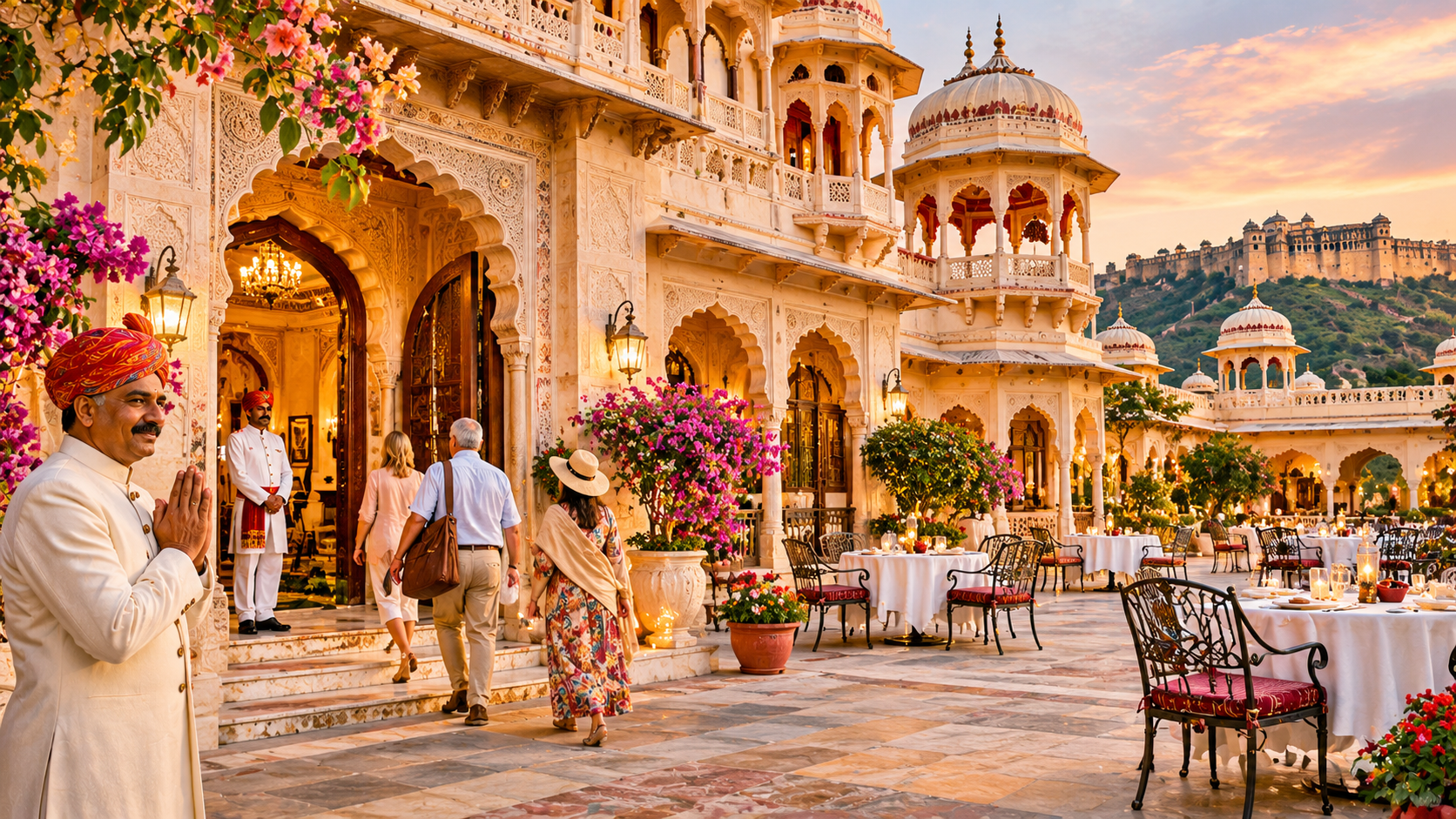
Walk into a palace hotel in Rajasthan and the first impressions may be architectural: a shaded courtyard, carved stone screens, painted ceilings and corridors built for a household very different from the guests arriving today.
Behind that beauty lies a story of political change, difficult financial decisions and enterprise. Buildings once associated with princely authority have acquired new purposes as hotels, museums and cultural spaces. For some former ruling and noble families, opening their homes to paying visitors became a way to maintain an expensive inheritance. Other properties found new futures through leases, professional operators or new owners.
The transformation was neither immediate nor universal. Yet it offers a fascinating way to understand modern India—and to look more closely at the places we visit.
From Princely India to a Democratic Republic
Before independence, princely states existed alongside territories administered directly by British India. Their rulers held differing powers under British paramountcy, and their states varied enormously in size, resources and influence.
The integration of princely states into independent India changed that political order. Former rulers’ circumstances differed, including the personal properties they retained and the financial arrangements that followed integration.
A further turning point came in 1971. The Constitution’s Twenty-sixth Amendment ended official recognition of the former rulers and abolished privy purses, the payments associated with the earlier constitutional arrangements. Article 363A records this change. Read the constitutional provision.
This history needs two distinctions. The end of princely rule was a political transformation, not simply a business setback. And a former ruler, a noble estate holder and a wealthy merchant did not occupy the same historical position. Their descendants’ experiences cannot be explained through one uniform story of lost privilege.
Traditional titles may remain familiar in social and ceremonial settings, but they do not confer governing authority in today’s republic.
An Impressive Inheritance Could Be Expensive to Keep
A palace can hold immense architectural and emotional value while costing more to maintain than it earns. Roofs need repair, gardens require water, painted surfaces need specialist attention and older services may need replacement.
Converting such a property into a hotel adds another layer of work. Guests expect reliable plumbing, comfortable rooms, cleanliness, safe access and consistent hospitality. Providing these within historic spaces requires careful design, funding and professional management.
Families responded in different ways. Some pursued politics, agriculture, business or professional careers. Others developed hospitality enterprises, worked with established operators or sold property. Museums, cultural institutions and private residential use offered additional paths.
It would be misleading to assume that every former royal household was left without resources, or that every descendant still possesses substantial wealth. The visible palace hotels represent particular outcomes within a much more varied history.
Why Hospitality Offered a New Purpose
Historic residences offered something a conventional hotel could not easily reproduce: a setting shaped by earlier lives, distinctive craftsmanship and a connection to the surrounding region.
For travellers, the building itself could become part of the reason to visit. For an owner, accommodation, dining and carefully managed events could help generate income for its upkeep.
This is often described as adaptive reuse: giving an existing building a useful new function while retaining important elements of its character. Success depends on what is preserved, how changes are made and whether the new use remains workable over time.
Royal history might attract attention, but it cannot replace good service or financial discipline. A welcoming stay relies on the work of cooks, housekeepers, gardeners, guides, restorers and managers as much as on the story attached to the property.
Udaipur: A Palace on the Lake Finds a New Life
Jag Niwas, better known to travellers as the Lake Palace, offers a striking example. Its island setting on Lake Pichola makes architecture and landscape inseparable from the visitor experience.
Taj’s published history dates its conversion into a hotel under Bhagwat Singh Mewar to February 1963 and the agreement with the Taj group to April 1971. That sequence is important: this hospitality venture began before the abolition of privy purses, so the constitutional change cannot be treated as the sole cause of palace-hotel development. Read Taj’s history of the Lake Palace.
The example illustrates how a historic property and professional hotel expertise could work together. It also reminds visitors that Udaipur’s appeal extends beyond one building: lakeside views, museums, old-city streets and skilled local work all contribute to the destination.
When planning a visit, distinguish a hotel stay from sightseeing access. A palace operating as a hotel is not necessarily open to casual visitors on the same terms as a public museum.
Jaipur: Royal Residence, Hotel and Cultural Landmark
Rambagh Palace shows how one property can pass through several uses. Taj’s account traces its beginnings to 1835 and describes its roles as a residence, royal guesthouse and hunting lodge before its association with Sawai Man Singh II and Gayatri Devi. Today it operates as a palace hotel. See the official Rambagh Palace history and factsheet.
Its story is best understood within Jaipur’s wider landscape of courtly architecture, planned streets, craft traditions and public life. A hotel visit alone cannot tell that entire history.
Jaipur also demonstrates that heritage can serve several functions. Museum collections, historic residences, religious spaces and hospitality businesses require different approaches to access and conservation. Visitors should ask which sections are included in an experience and respect private or restricted areas.
Jodhpur: More Than One Use Under One Roof
Umaid Bhawan Palace brings residential, museum and hospitality functions into the same palace complex. Taj identifies it as the principal residence of Jodhpur’s former royal family and describes its museum alongside the hotel’s facilities. See the official Umaid Bhawan Palace factsheet.
This arrangement offers a useful lesson: finding an economic purpose for a historic building need not mean turning every part of it into guest accommodation. Separate uses can coexist, with different responsibilities and access arrangements.
For travellers, the practical implication is straightforward. A museum ticket, a restaurant reservation and a hotel booking are different things. Confirm what your chosen visit permits before making plans.
Samode: A Noble Estate with Its Own Identity
The story of heritage hospitality extends beyond the capitals of major princely states. Samode’s official family history links its estate to the former Amber and Jaipur principality and describes the development of its palace, gardens and Jaipur haveli. Explore the Samode legacy.
Samode illustrates the appeal of a smaller historic setting: decorated interiors, courtyards, gardens and a close connection between a property and its surroundings. Its significance does not depend on treating every noble household as a sovereign royal dynasty.
For a visitor, that distinction adds interest. Ask who commissioned the building, what role the family held and how later generations altered it. Those questions reveal more than a general promise to “live like royalty.”
Rohet: Preserving a Home and Creating Something New
The House of Rohet describes opening its ancestral home, Rohet Garh, to guests in 1990. Its account of the property emphasises adapting existing buildings for hospitality. Read the Rohet Garh story.
The same hospitality enterprise also developed Mihir Garh, completed in 2009. This is an important distinction: a contemporary property inspired by regional traditions is different from an ancestral building converted into a hotel. Both can offer worthwhile experiences, but they tell different architectural stories. Read about the creation of Mihir Garh.
Together, these examples show two forms of enterprise: finding a new use for inherited architecture and creating new accommodation informed by a region’s landscape and design traditions.
Neemrana: Restoration Beyond the Original Family
Neemrana offers another route to reuse. According to the hotel group’s history, the fort-palace was acquired for restoration in 1986 and opened as a hotel in 1991. Its modern hospitality story therefore involves new ownership and conservation enterprise rather than simply the original ruling household becoming hoteliers. Read Neemrana’s restoration history.
That difference matters. The preservation of a building may depend on a family business, a professional partnership, a trust or a new investor. The appropriate model varies with ownership, resources, location and the condition of the property.
The broader lesson is that finding a viable use can help sustain a historic structure. Commercial activity alone, however, is not proof of good conservation; the quality of the work and the treatment of the building remain essential.
Not Every Haveli Was a Royal Palace
Rajasthan’s architectural inheritance also includes merchant homes. In Shekhawati, painted havelis tell stories of trade, family ambition and artistic patronage. Rajasthan Tourism’s account of Ramgarh specifically describes the role of merchant communities in building its mansions. Explore this merchant heritage.
Grouping all such buildings under “royal heritage” overlooks their distinct histories. A fort, palace, noble residence, merchant haveli and modern heritage-inspired hotel may look related in a travel brochure, yet their origins and uses can be very different.
Understanding those differences makes a heritage journey richer. It also encourages more accurate storytelling by guides, hotels and travel companies.
The Business Behind the Beautiful Courtyard
A heritage hotel must manage both a building and a service business. Its responsibilities can include specialist repairs, sensitive installation of modern systems, staff training, seasonal demand and substantial operating costs.
Historic layouts may create practical constraints: uneven floors, stairs, distant rooms or limited opportunities to install lifts. Restoring decoration requires different expertise from routine maintenance. Large events may generate revenue while also increasing pressure on gardens, interiors and services.
Sound management means assessing what the property can accommodate without damaging the qualities that make it special. It also means setting realistic expectations for guests. A historic room may be distinctive without having the identical layout or access found in a purpose-built hotel.
Heritage creates an opportunity. Conservation, service and careful management determine what becomes of it.
Who Else Benefits from Heritage Hospitality?
A restored property can provide work for hospitality staff, suppliers, drivers and guides. Conservation can also create demand for specialist skills in stone, wood, lime plaster, painting and decorative work.
These wider benefits deserve attention, but should not be assumed automatically. Local purchasing, fair payment, training and responsible treatment of neighbouring communities help turn visitor spending into meaningful opportunity.
A palace’s history includes the people who built, maintained and served it, as well as the family associated with it. Contemporary interpretation should make space for those contributions. Our article on the people behind India’s tourism economy explores this wider responsibility.
What to Check Before Booking a Heritage Experience
Use these questions to choose a visit that matches your interests:
- What is the building’s history? Ask whether it is an original historic residence, a restored property with later additions or a modern interpretation of traditional design.
- What can you access? Confirm whether your booking includes accommodation, dining, a museum or a guided visit—and which areas remain private.
- How suitable is the layout? Explain any mobility needs and ask about steps, lifts, walking distances and the exact room location.
- What is included in the price? Check meals, transfers, guided experiences, taxes and cancellation conditions in your written quotation.
- Will events affect your visit? Ask whether weddings, private functions or restoration work may restrict access during your dates.
- How is the history explained? Look for interpretation that distinguishes documented events, family accounts and local legend.
Opening arrangements and availability can change. Confirm directly for your dates rather than assuming that a hotel, museum and private residence share the same access rules.
Explore the Stories with GUIDEWALA
A knowledgeable local guide can connect a palace’s architecture with the city around it: how water shaped a garden, how a courtyard organised daily life or how trade and patronage supported local craftsmanship.
When enquiring with GUIDEWALA, share your destinations, dates, preferred language and interests. Explain whether you want palace museums, architectural walks, heritage accommodation or a combination, and request confirmation of access and inclusions.
Our guide-booking checklist can help you prepare those questions.
A New Purpose for an Inherited Past
The transformation of India’s former royal and noble households is a varied story of political change, professional choices and enterprise. Heritage hotels are one visible part of it, alongside museums, cultural institutions and lives pursued outside the public spotlight.
Their value lies in more than the romance of a royal name. Thoughtful reuse can keep architecture in service, support specialist skills and give visitors a way to engage with history.
The most rewarding visit looks beyond the grand entrance. It asks who built the place, who worked there, how it changed—and who helps sustain it today.